
What makes a good fitness logo design?
A good fitness logo can be hard to achieve. Lets face it, there’s a lot of competition around in the fitness industry and it can be easy to get lost in a sea full of fitness logos. Inspiration for fitness logos are easy to find, but there’s a lot of poor-quality fitness related logos out there. So, lets dive straight in and find out what makes a good fitness logo.
Target a specific audience
So, your fitness business needs a logo, but what should it be? How much does a logo design cost? Knowing who you want to target with your fitness brand makes all the difference. It’s extremely common for companies to want to target a large audience to their facility, males and females of all ages is extremely common. However, if we narrow down who your business wants to target more specifically, creating a logo for it can be far more effective.
We have to consider the area in which your facility is located, and the cost of visiting your fitness facility or service. Is it a cheap gym that requires a logo? Is it small group personal training that you’re trying to attract? These are good questions to ask yourself which will aid the logo design of your business. Does the studio mainly attract women, or is it that really grungy, male-dominated, strength gym that you’re operating?
We can quickly discover who the target audience is, with a bit of thought. And, then, what the age group of the fitness business is, too. All of these elements equate to what the logo design for your fitness business should equate to.
Small fitness studio logo design
A fitness studio that’s small, intimate and personable should have a logo design that represents those features. If the class sizes are small, then creating a logo to represent a fitness facility that is close, warm and friendly should be represented in the logo design.
A consideration should also be the location of the small fitness studio, whether it’s in trendy South Yarra or Prahran, or in the outer suburbs of Melbourne, for example, would make a big difference to the target demographic of the studio, and potential the cost of membership / price per session.
Franchise fitness logo design
A logo for a gym franchise is a little bit different to a small fitness studio. A consideration comes more about location and cost of use. This should be represented in the logo design for a franchise fitness business. Can the member use a key fob and go to multiple fitness facilities, like Fitness First, Anytime Fitness, and so on? Are the studios located in inner Melbourne, or are they scattered throughout Australia?
Gym logo design
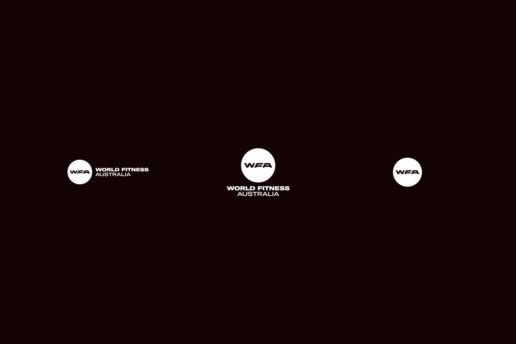
An independent gym logo blends the above two features together. It might be the fact that the gym is large (or small), cheap (or expensive) and location/s are important to consider too. Again, to atrget the right audience with your gym logo design is critical to its success. It may also be an online fitness store logo design that you're after, similar to World Fitness Australia. The same rules tend to apply for these, too!
Personal trainer logo design
When I consider personal trainer logo designs, I think the personality of the trainer is a bigger factor. The logo I designed for Apex Training gives a great insight in to my thoughts and process and you can also read about their logo design case study. It might be their specific training style that has a higher consideration, along with location, gender and potential clientele.
It’s extremely important for a fitness logo to be relevant to the target audience of the gym, facility, clients and demographic of their clients and prospective members. To have the right logo design is one thing, but branding is also extremely important to really capture the audience you want to.

Logo Design Cost & Process
The cost of a logo design varies from country to country, designer to designer and client expectation to, well, client expectation. It can be a hotly debated topic, where people often question why a logo will cost so much. Well, I’m here to try and explain the cost of a logo and give an explanation as to why I charge what I do for a logo.
The logo design process
The first thing to discuss is the process itself. It’s a multi-step process that can involve such things as research, brainstorming, sketching, comparisons, concepts and revisions. And, with so many variables, that’s part of the reason why a logo ranges in price. From the outset, I’ll say that I don’t have set prices for logo designs, but I do have ranges that I can estimate what the cost will be based on past experience.
A logo can be used in so many different places. And, before you jump on Fiverr and find the cheapest, ill-considerate designer you can find, think about the cost of running a business and how much a logo actually means to the business. Do you ever look at company logos when you visit a website? In a shopping centre? On products? Do you make snap decisions on whether or not you’ll buy that product based on their logo? You might actually be surprised how many people, yourself included, make decisions on what jam to buy, or what gym to join or what clothes to wear based on their logo design alone.
So, a logo can live in many different places; online, digitally, printed on business cards or shop walls, marketing material and so on. And all those variations can result is multiple logos being needed to be created. Logo file formats are usually in raster or vector.
Raster vs Vector Logos – What's the difference?
Raster files are measured in DPI (dots per inch) and have a file extension such as .jpg, .gif or .png. These files are based on pixels, which are set dimensions. So, increasing or decreasing the size may result in pixilation or distortion. That is because the computer is working out where to fill in the pixels.
Vector files can be scaled to any size you can imagine without losing quality, which is great for printing (think billboards) all the way down to social media posts and email signatures. They can also be opened, edited, and saved in different applications, and have a file extension of .ai, .eps, .svg or .pdf. But don’t be fooled, some people place raster files inside vector files – these will not act the same way.
Colour variations of Logos
It should also be noted that logos need to be visible as much as possible. Their usage can vary too, so it’s important to have the logo designed in different colour combinations to make this possible. You’ll generally need light, dark, full colour and monochrome variations of the logo. I like to supply black and white logos for the times when a job might also be set in black and white.
We’ve also got colour options such as RGB (for digital logos), CMYK (for printed logos) and Pantone logos for spot colour jobs.

Costs / Packages of logos
Agencies can charge quite a lot for a logo design. The reason is because of their large overheads and staff that they have to pay, which is fair enough. I generally don’t charge close to what an agency charges which can be between $5,000 - $10,000. For a business, this can be a substantial outlay especially if you’re a start-up.
I tend to charge less, because whilst I have the experience of an Art Director, I still call myself a Senior Freelance Graphic Designer, because I feel like that’s a more suitable title for me. In fact, I’ve had clients who have come from having a logo developed by an agency, not been happy with their job and come to me to get a higher quality logo at a cheaper price.
My process and costs
I generally ask for a 50% up-front deposit to commence the logo design process. This allows me to have confidence in the client, and the client has confidence that project is underway. I’ll always ask the client information about their business. I’m invested in problem solving the situation to create, what I believe, is the best solution for the client.
So, what is the best solution? Well, you may have read in my other articles that targeting a specific socio-economic group and target demographic is the most important thing. This is because you want the logo and brand to appeal to a specific person – the person you want to sell to. This could be a wealthy 65 year old male from Brighton in Melbourne who loves expensive cars. Or, it could be a uni student just scraping through with rent each week and just wants the cheapest gym in town. Either way, your company has a market it wants to hit, and a logo can be massive in targeting the correct crowd.

So, analysing your business with key information is critical. Are you big, are you small, have you been around for 30 years, are you close to the beach, who’s your competition, your market, where are you selling, and so on. So many answers do I want to pack into your logo to design it the correct way. It’s a very psychological and meaningful process that deserves consideration.
Logo concepts and revisions
I generally create three logo concepts first up. I think it’s important to suss out which direction the company can go in, and which of the critical information that I spoke about above, needs to speak the loudest (in the logo). I ask for feedback from the client, to see if my analysis is correct. Majority of the time it isn’t too far off the pace, and a good brief from the client usually makes this the case.
Some designers give a set amount of revisions like 2 or 3, and price their logo based on that. I don’t agree with that process, because if a logo fits after the first revision, then that’s a resolution. If it takes 4 or 5 passes, then perhaps the brief, or my interpretation of the brief, isn’t correct. That doesn’t mean it’s job over, so it’s no stress, it just means that further clarification may be needed.

All of these variables I talk about are reasons why I don’t have a set-in-stone cost. However generally a logo for a small business will cost between $1,500 - $3,000 which is substantially less than an agency. And, I like to think that I put more care into a logo than an agency would too (but I’m bias)! For mid-sized companies, or companies with more exposure, this cost can be more. Somewhere between $2,500 - $4,000.
So, if you’re thinking about getting a logo design created, hopefully this article has helped. I’d be more than happy to discuss your business and requirements with you and give you a more accurate figure. I’ve done a lot of logos now, backed with 10 years of experience, that I have a good idea as to how much your logo could cost.
All the best on your logo making journey!

New Logo and Website - A Graphical Insight
New Logo and Website - A Graphical Insight
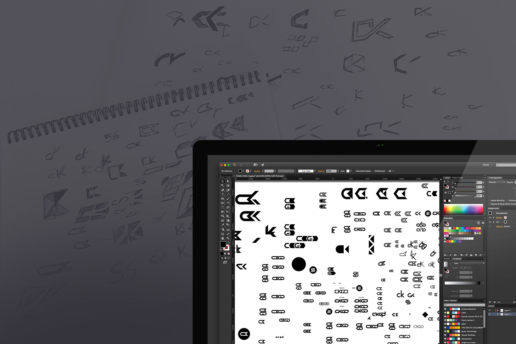
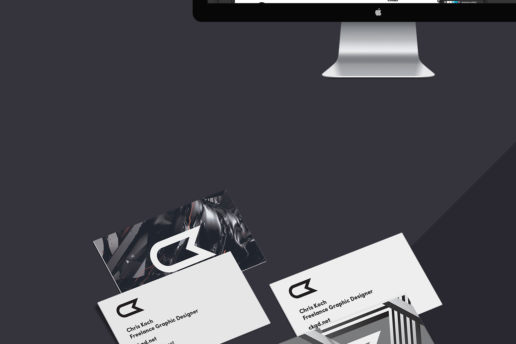
With my brand new website and logo now live, I thought it would be nice to show them both off in a graphical visual representation. This series of images allows you to see a snapshot of my personal logo design process, history of my logotype, concepts and ideas and web development.
I believe my new CK logo is an evolution of my previous logo, which is what I set out to be the case right from the beginning. The change was one, I felt, I had to make. I want to take my business in a slightly different direction and have a somewhat fresh start. The new logo is far more brandable, a bit less style specific and appeals to a wider target audience than the existing one did. As much as I liked my existing logo, I didn’t feel like I could achieve this. Furthermore, it was important for the design of the logo to be relatable and relevant to my existing design style.
Visually, I wanted it to be accurate. I considered a lot of things such as angles, line weight, visual balance and complexity. Whilst I executed a wide range of different styles, I was the most happy with this particular concept as it felt like it was me.
I’m really happy with the way its turned out and I’m super excited to start using it and adapting it to different things.
You’re welcome to ask any questions you might have about the logo design process or branding in the comments section below!




Logo Design - Typical Creation Process
Logo design always throws up all sorts of discussion. Why do some designers charge so much / little for a logo? Why does it take so long to design a logo? What are the benefits of having a logo? And so on.. Well, in this artcile, I'm going to discuss a little bit about the design process when creating a logo. We'll be discussing all sort of things from concepts to final production. Many variables come into play in the process, so I'm going to keep it as general as possible in order to try and communicate the process as best as I can. Here goes!
The Logo Design Brief
The brief is extremely important for a logo design. Mainly because what I'm about to create is the face of your company and it's important for me to know as much relevant information about the client's company as I can. So, not only is timeframe, a factor when designing a logo (or anything for that matter), but details regarding your business are just as important.
Here's a list of some areas of critical information which is extremely important in regards to logo creation:
- Business size – sole trader, micro, small, medium, large.
- Business age
- Tagret demographic – almost the most important piece of information. Who are you trying to appeal to?
- Product / service cost – who do you cater for, socio-economic wise?
- Competitors
- Budget
Initial brainstorming / sketches of the logo design
I always begin a logo design with paper, pencil and my A3 sketch book.
Generally, I'll begin with a mindmap, of sorts, or key words about the company, style of the logotype, symbol, colours I may potentially use, the mood of the logo and so on. I believe in writing down as many words to describe what I'm trying to achieve as possible, but I want the words to be accurate to the company, it's beliefs and the target audience.

For my sketches, I very rarely use an eraser, because at this point, the sketches are quite quick and purely encompass an overall style for the logo. The amount of pages I go through for a project really depends on the complexity of the brief. Sometimes it's just a page of sketches, other times 3 - 4 pages. Again, I'm happy to sketch out whatever I feel is relevant to the brief. Whether or not it's going to end up being the final final doesn't worry me at this point in time. Often I'll sketch things which I know won't even be considered, but sometimes they're the link between two very different concepts.
Execution of my sketches isn't hugely important. Some effects and techniques I'll know I can execute better on a computer when I get to that stage.
Designing a logo in Illustrator
Once I've completed my sketches, I'll jump into Illustrator and start playing with a few concepts. I sometimes bounce between my computer and sketch book, just to jot down or sketch out a new idea first. For some sketches which I've done quickly by hand, I know how they'll look digitally, but look very different in my sketchbook.
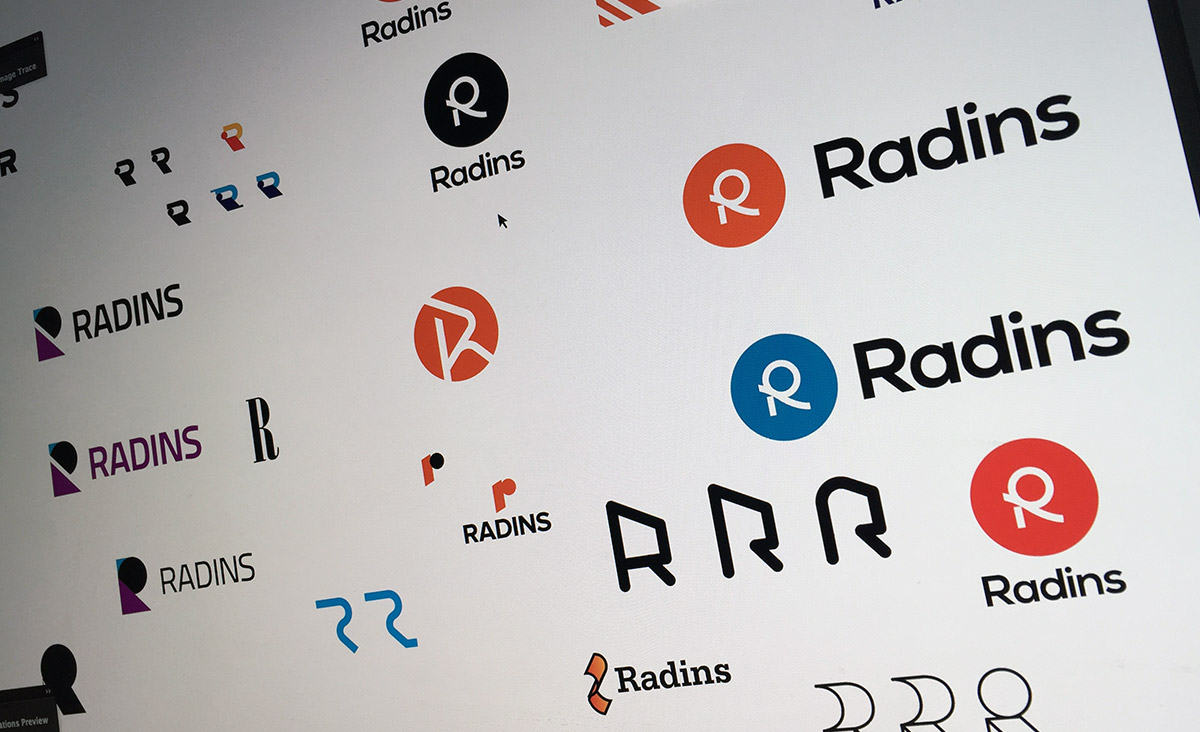
I always design my logos in Adobe Illustrator, regardless of time, who the client is and what they're going to use it for. It is the best application for creating a logo due to the tools available and the accuracy in which it can be produced. Also, as a vector file (which Illustrator handles), I know I'll be able to make the logo as big or as small as I (or the client) want to in the future. I'll begin experimenting with typography, lettering, shapes and scalability of the logo constantly. Scalability is often overlooked by designers and clients alike, as a logo might look fantastic in a large size, but when resized to a smaller size it's unreadble. Having a secondary window open at a smaller scale can also be beneficial.
It's difficult to cover all types of logos in one article, but in general it's important to use as few points as possible in the logo and make it as clean as possible. There shouldn't be any waste.